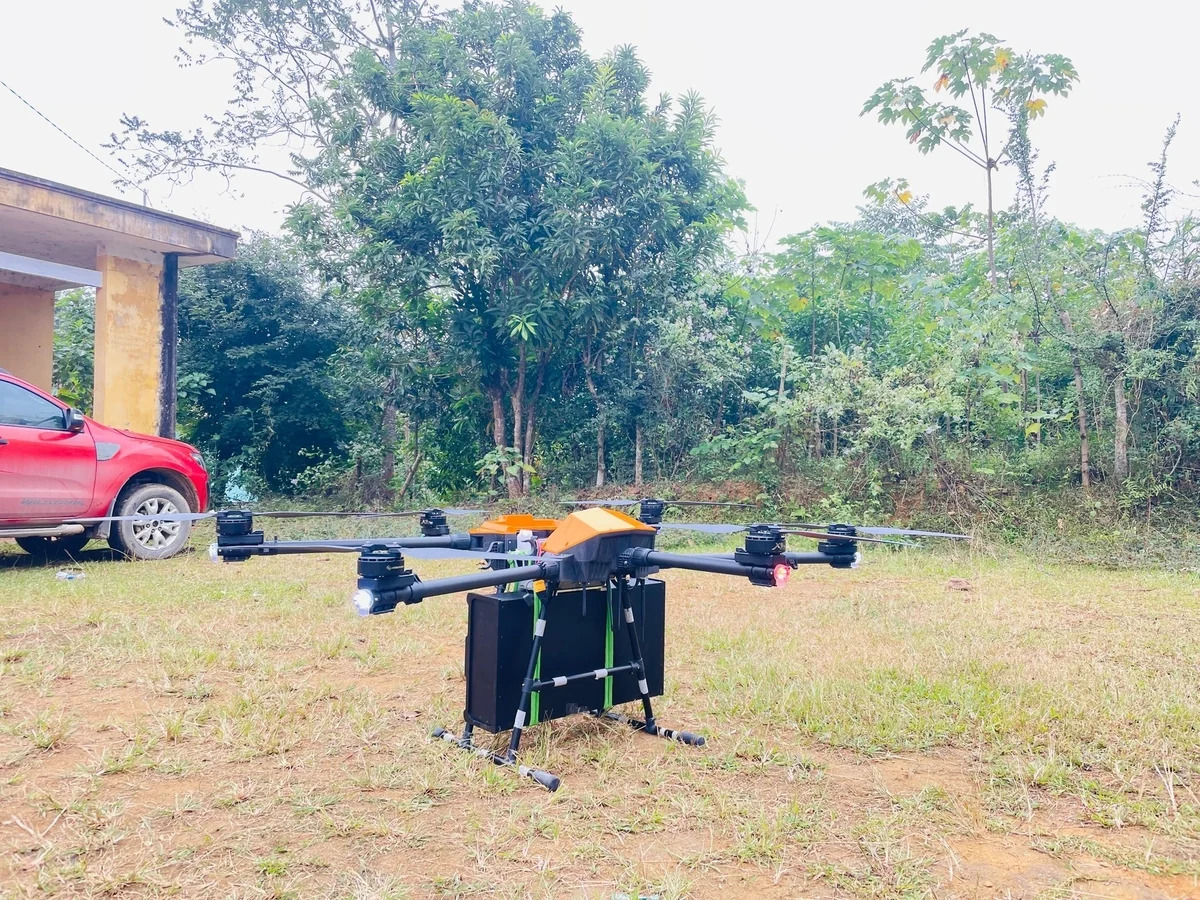
Addressing a practical need, the Geophysics Division successfully developed an aerial gamma-ray spectrometry device, marking a technological breakthrough for Vietnam’s geology sector.
Dr. Lai Manh Giau, Head of the Division of Geological Physics and the project leader, shared further details about the journey to achieving this breakthrough.
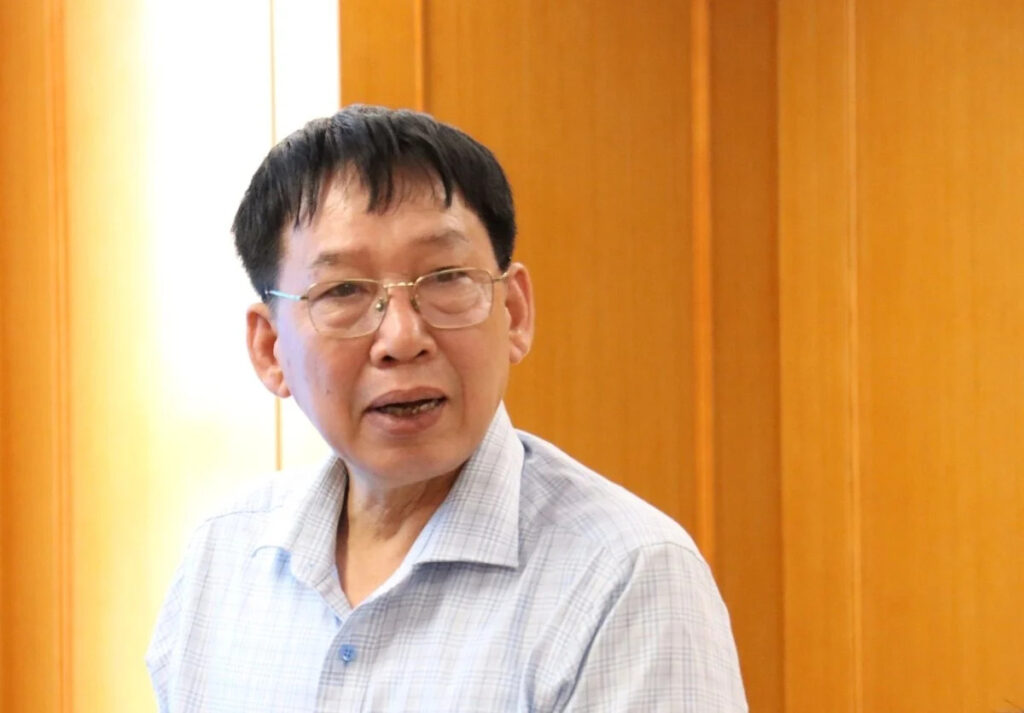 Dr. Lai Manh Giau, Head of the Division of Geophysical Geology, stated that the project was launched with the aim of researching, designing, and manufacturing a specialized measurement system to enable the geology sector to take a more proactive approach to technology. Photo: Mai Dan.
The project “Research and Development of an Airborne Gamma-Ray Spectrometry System Using Unmanned Aerial Vehicles” has garnered significant interest from the professional community. What motivated you and your research team to undertake such a groundbreaking project ?
This idea stems from a practical challenge that has long concerned Vietnam’s geology sector. Previously, airborne gamma-ray spectrometry surveys relied on manned aircraft. While effective, this method is extremely costly, requiring significant funds for aircraft and pilot rentals as well as other operational expenses. Furthermore, given Vietnam’s complex and rugged terrain, manned flight operations face numerous limitations and risks, and are unable to access small or narrow areas.
Recognizing the remarkable advancements in unmanned aerial vehicle (UAV) technology, we believe this offers an ideal solution. By integrating gamma-ray spectrometry equipment onto UAVs, we can simultaneously overcome cost and terrain-related challenges, thereby enhancing data collection efficiency for fundamental geological and mineral surveys. This project was initiated with the goal of researching, designing, and manufacturing a specialized, “Made-in-Vietnam” measurement system, enabling the industry to achieve greater technological autonomy.
Beyond the concept of automation, the project is highly regarded for its “Made in Vietnam” nature, as it utilizes the organization’s decommissioned equipment to create a modern product. Could you share more details about this process ?
This is perhaps one of our proudest achievements. Instead of investing a massive sum in purchasing new equipment, we made a bold decision: to repurpose decommissioned materials and equipment from the Geophysics Division to upgrade and fabricate our own systems.
This process was by no means easy, requiring creativity, meticulousness, and in-depth expertise from the entire team of authors. We faced numerous technical challenges—ranging from calibrating legacy sensors and redesigning electronic circuitry to optimizing software—to ensure stable and accurate operation on the UAV.
As a result, two airborne gamma-ray spectrometers have been successfully manufactured. Notably, these devices not only meet the required standards but also surpass many technical specifications of similar products available globally. Mastering the technology and manufacturing the equipment in-house has resulted in significant cost savings while demonstrating the capabilities of Vietnamese engineers and scientists.
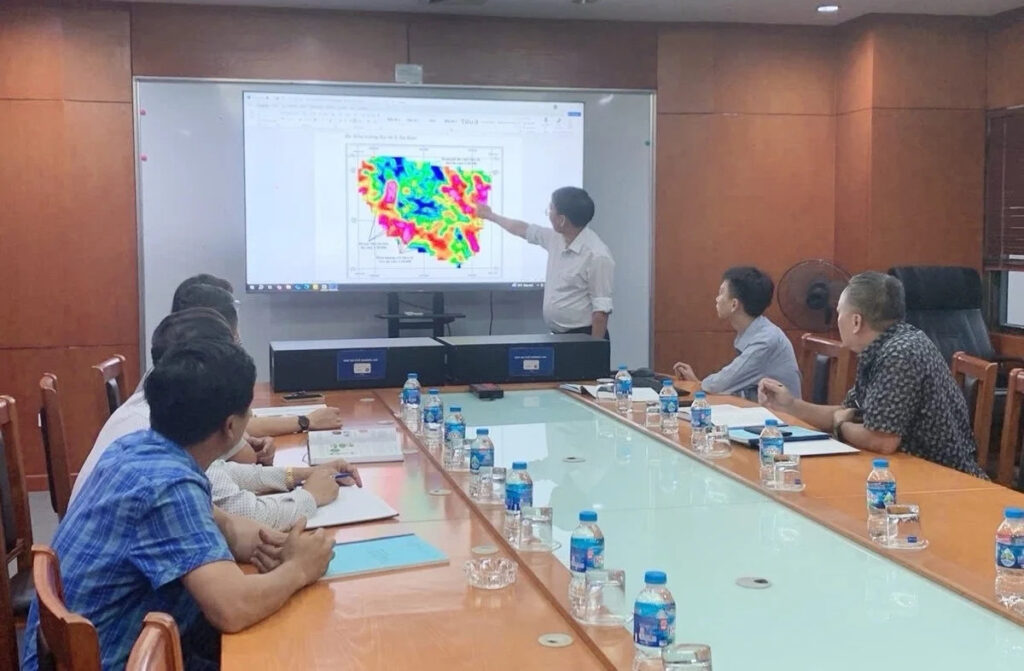 Based on feedback from the Ministry of Agriculture and Environment’s advisory, evaluation, and acceptance council, the research team will refine the project by clarifying technical specifications and conducting further testing under various weather conditions—such as assessing rain resistance and impact resilience during landing—to formulate appropriate usage recommendations. Photo: Mai Dan.
Could you please specify the results of this research project ?
The project has generated two main categories of products, comprising both tangible products and documentary outputs.
The first is the Type I product: a set of two airborne gamma-ray spectrometry units named SPECTRUM-UAV1. These devices not only meet but also exceed many of the specified requirements. Notably, the data acquisition rate is adjustable from 1 to 60 seconds, surpassing the initial target.
Although the SPECTRUM-UAV1 airborne gamma-ray spectrometer utilizes an older crystal, it remains fully qualified for use in geological and mineral exploration. The fact that the device continues to meet critical performance metrics—particularly regarding accuracy—is of significant practical importance. In geological surveys, accuracy is a key factor in correctly identifying mineral types and precisely delineating areas containing mineral resources.
The SPECTRUM-UAV1 system features automatic data acquisition and transmission capabilities, along with autonomous programmed flight, helping to optimize the survey process. This is particularly beneficial for surveys in rugged terrain that is difficult to access using traditional methods, such as ground-based surveys or the use of large aircraft.
The second category consists of Type II products, comprising a series of reports and draft technical procedures. These products hold significant practical value. Specifically, we utilized the research findings to develop a draft Circular on technical specifications for airborne gamma-ray spectrometric surveys, as well as draft economic-technical norms for data acquisition and processing.
Establishing these procedures and standards creates a solid legal foundation for the practical application of UAV technology, helping to optimize costs and flight-survey processes compared to traditional methods—particularly in areas with complex, rugged terrain. The Council has assessed these outputs as fully meeting requirements and offering exceptional value.
In your opinion, what improvements still need to be made to the device ?
The project has just been approved by the advisory, evaluation, and acceptance council under the Ministry of Agriculture and Environment. To finalize the work, we will incorporate the results of test flights for each instrument and compare these findings with existing ground-based gamma-ray spectrometry data, including data from the 2025 rare-earth exploration project. This will provide more empirical evidence regarding the equipment’s performance.
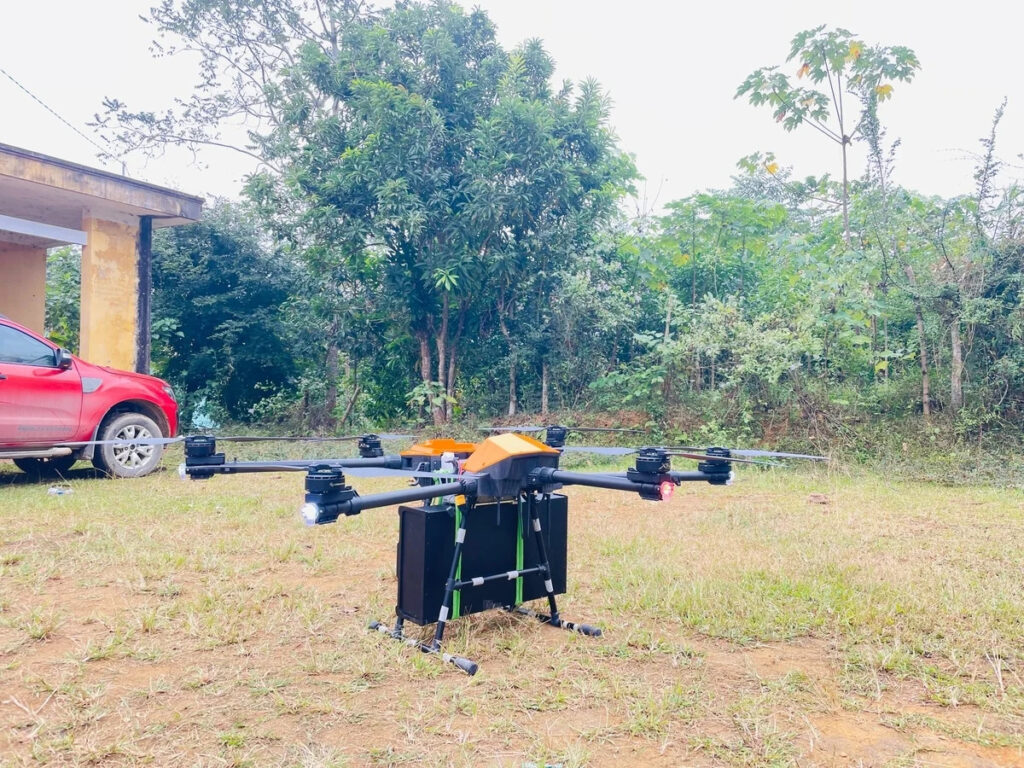 By integrating gamma-ray spectrometers onto UAVs, the Geophysics Federation can simultaneously overcome cost and terrain-related obstacles, thereby enhancing data collection efficiency for fundamental geological and mineral surveys. Photo: Linh Nguyen.
In addition to refining and clarifying technical specifications, we will conduct further testing of the device under various weather conditions to provide appropriate usage recommendations—such as its rain resistance or impact resistance during landing.
This feedback is crucial for us to enhance the quality of the final product and ensure that the device operates with maximum efficiency when widely deployed in real-world applications.
Thank you very much, sir!
The project “Research and fabrication of an airborne gamma-ray spectrometry device using unmanned aerial vehicles” falls under the program “Research, innovation, design, and fabrication of specialized equipment for basic surveys of natural resources and the environment, and for waste treatment (2021–2025),” implemented during the 2023–2025 period. Following its acceptance, the device is expected to be ready for practical application and production starting in 2026.
By: Mai Dan (Source: Agriculture and Environment Newspaper, November 16, 2025)